
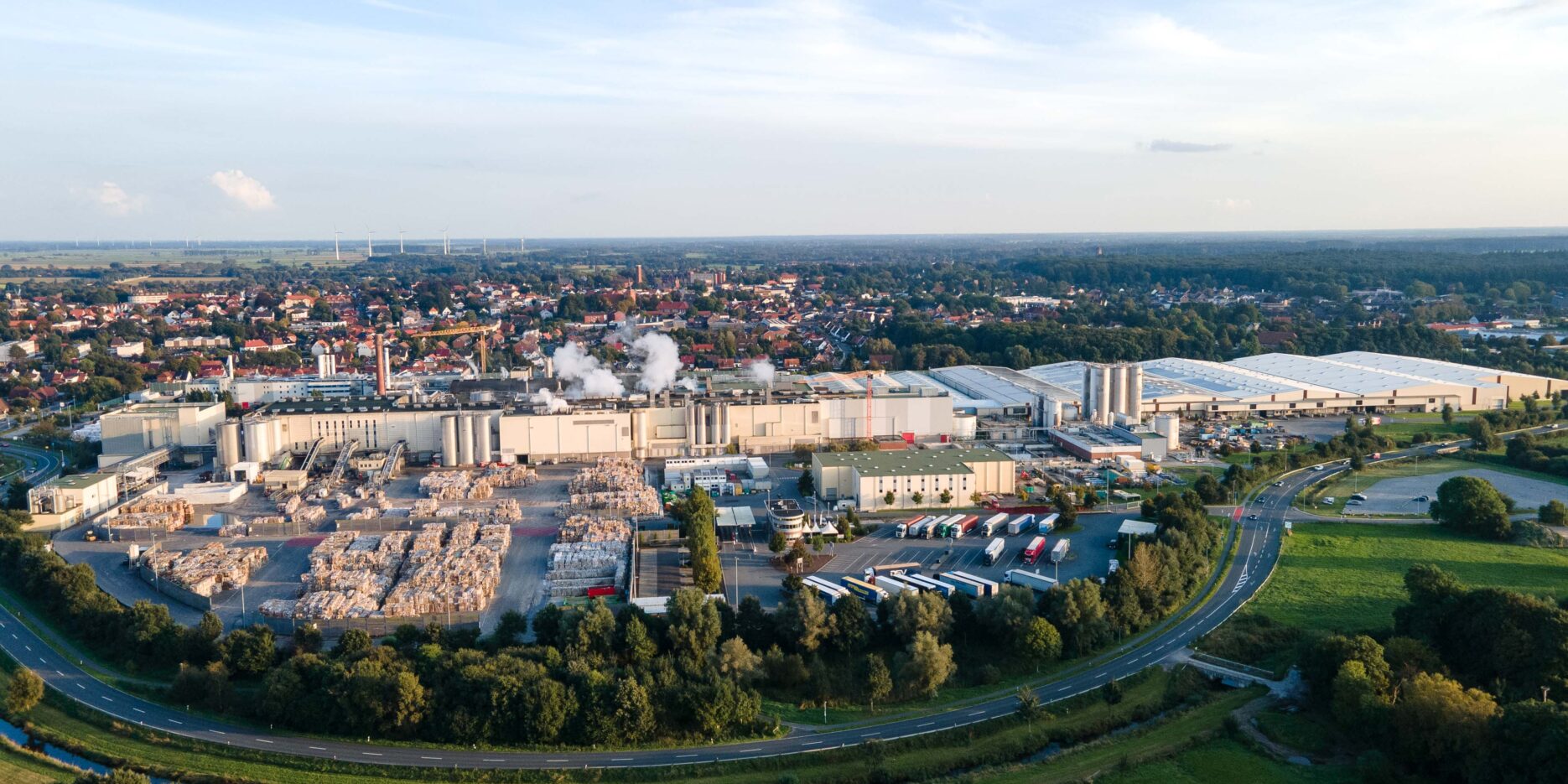
By 2031, we aim to reduce ourCO2 emissions by 42 percent, and by 2045, we aim to produce paper and cardboard from recycled paper in a completely climate-neutral manner—as part of a perfect sustainable cycle for packaging materials. We are investing a three-digit million amount in this project. But we believe this goal is worth the effort, even though it also presents major economic challenges.
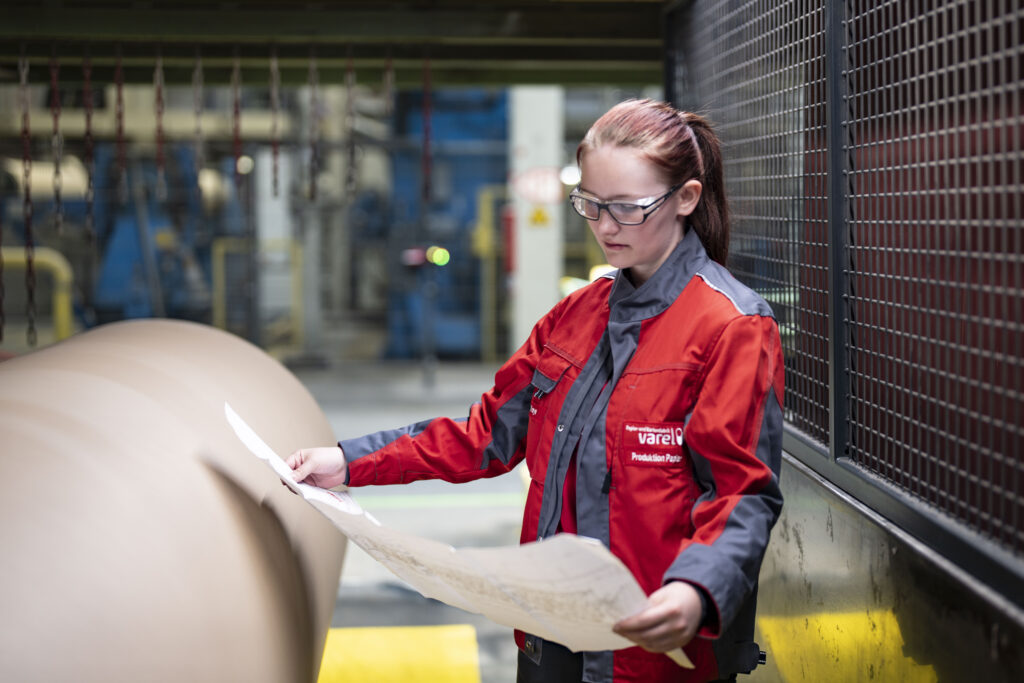
We are an energy-intensive company, like about 1,700 other companies in Germany. This means that the factory requires large amounts of energy—primarily to dry the new paper, which is produced from recycled paper using water, with heat in the form of steam, and to power electric motors and pumps.
Until now, this energy has come from natural gas. Since the 1980s, natural gas has been the most efficient and cleanest way in our dual combined heat and power system to generate the electricity we need—and, above all, our process heat—from fossil fuels. At the same time, for decades we have made a point of saving more and more energy through new technologies and processes.
However, natural gas releasesCO2 when burned.CO2 is a greenhouse gas that accelerates climate change.
To mitigate the negative effects of climate change, the EU and Germany have enacted laws designed to limitCO2 emissions. This means that energy-intensive industrial companies are required to reduce theirCO2 emissions. This reduction is referred to as decarbonization.
For us as a company, this means finding ways to manufacture the same volume of products with lowerCO2 emissions. Decarbonization is therefore not only important for preventing further harm to people and the environment caused by climate change, but also for complying with legal requirements.
At the same time, this presents a major opportunity for energy-intensive companies like PKV. We have been relying on recycled paper as a raw material since 1950. Recycling and sustainability have always been a fundamental part of our corporate identity. If we can now use decarbonization to economically produceCO2-free products from recycled paper, we’ll have taken a major step toward a perfectly sustainable packaging cycle!
We have set a goal to reduce ourCO2 emissions(Scope 1 and 2)* by 42 percent by 2031 compared to 2021 and to achieve net-zero greenhouse gas emissions by 2045, as stipulated in the Federal Climate Protection Act —and thereby follow the overall pathway outlined in the 2015 Paris Agreement to limit the rise in global average temperature to 1.5 degrees Celsius, if possible. We also intend to have our pathway validated by the globally recognized Science Based Targets Initiative (SBTi).
In practice, we will rely on a mix of different energy sources. There are reasons for this. Our facilities operate 24 hours a day and require not only a large amount of energy but also a very consistent supply.
So relying solely on solar or wind power from our own facilities won’t get us anywhere, because we can’t shut down the facilities every night or when there’s no wind. Furthermore, a solar or wind farm of that size would take up an area larger than the entire town of Varel. It would also be unaffordable for us. So that’s not an option—at least not as our sole source of energy.
Nevertheless, green electricity (from the power grid) will be a major part of our solution. To achieve this, we need a new, much larger power connection—and new systems on our factory grounds that use the electrical energy to generate the urgently needed process heat. More information on this is available in our FAQ. We plan to replace most of the natural gas we’ve been using as an energy source with green electricity.
In addition, we aim to substantially reduce specific energy consumption per metric ton—in other words, to save energy. To this end, we are planning a series of measures, both large and small, over the coming years. We have often explored these issues in the past through preliminary technical projects—and now, given the overall significant increase in energy costs, they also make economic sense. Among other things, this will involve making even greater use of electricity and heat generated from our own biogas in our process water treatment (in an expanded combined heat and power plant).
Another step that has been examined in initial concept studies is the use of large-scale industrial heat pumps and increased utilization of waste heat from the drying process of our products to reduce absolute energy consumption. However, there are currently no reference projects in the paper industry in this area, which means further in-depth analyses will be needed in the coming years to decide whether to implement this on a large scale.
We also want to use energy from waste that we already have on the factory grounds. A lot of things end up with us in the paper recycling bin that don’t actually belong there. Even today, we carefully sort this waste, process it into a fuel (in the form of pellets), and it is then burned elsewhere to generate energy, for example in cement plants or combined heat and power plants. In the future, we want to use this energy ourselves in a new EBS power plant (EBS = substitute fuels) on our premises. This is because approximately 35 percent of this waste consists of biomass. This biomass is classified as renewable energy because it releases only as muchCO2 as it absorbed during its growth in nature. You’ll also find detailed information on this topic below. Whether these remainingCO2 emissions will ultimately be captured and possibly utilized remains to be seen, but it could be a viable approach if the technology has developed and become established by then.
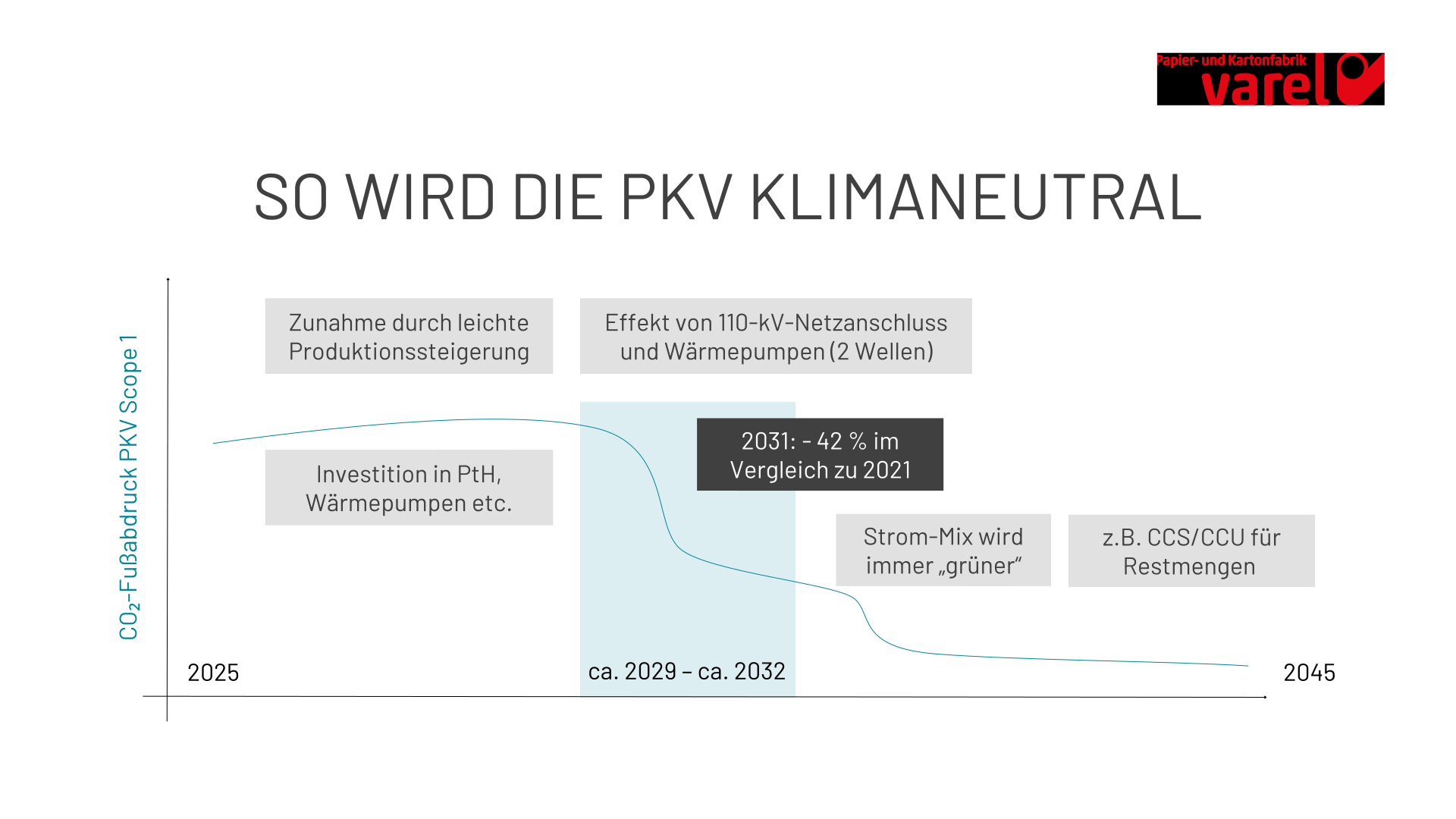
Once these plans are implemented, we will be able to produce new packaging material from a recycled raw material (waste paper) in a perfect ecological cycle without additionalCO2 emissions.
*Scope 1: Direct emissions | Scope 2: Indirect emissions from purchased energy
Note: On this page, we use the terms “CO2 emissions” and “climate neutrality” for the sake of readability and to facilitate general understanding. These terms refer, respectively, to all GHG emissions and the concept of net greenhouse gas neutrality in the context of Germany’s climate targets.
General Questions About Energy Use
Our Decarbonization Pathway
Dekarbonisierung durch Strom
Dekarbonisierung durch EBS (Ersatzbrennstoffe)
Dangaster Straße 38 · 26316 Varel
Schritt 1 von 3
Ihre Nachricht wurde erfolgreich übermittelt.
You need to load content from reCAPTCHA to submit the form. Please note that doing so will share data with third-party providers.
More InformationYou are currently viewing a placeholder content from Turnstile. To access the actual content, click the button below. Please note that doing so will share data with third-party providers.
More Information
